- Name
- Cliff Barker
- Position
- Guard, Guard-Forward
- Hometown (Last School)
- Yorktown, Indiana
- Ht
- 6'2"
- Wt
- 185
- Seasons
- 1946-47, 1947-48, 1948-49
- Birthday
- January 15, 1921
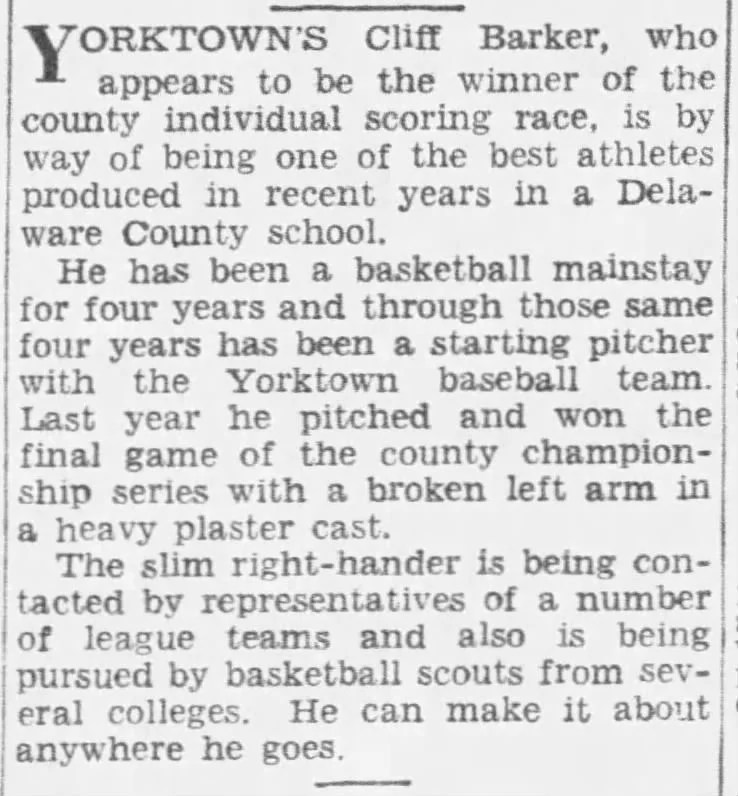
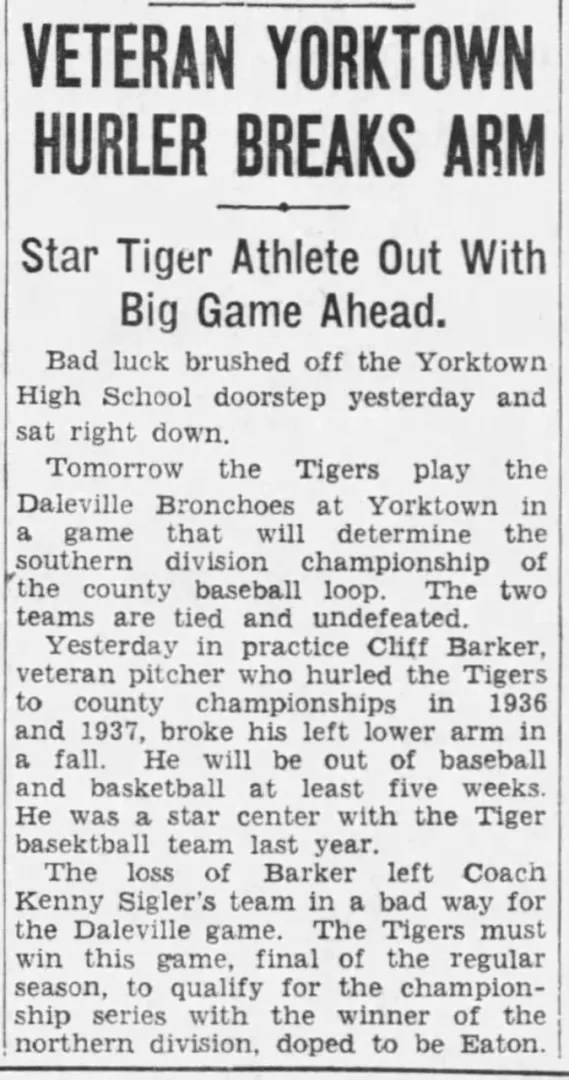
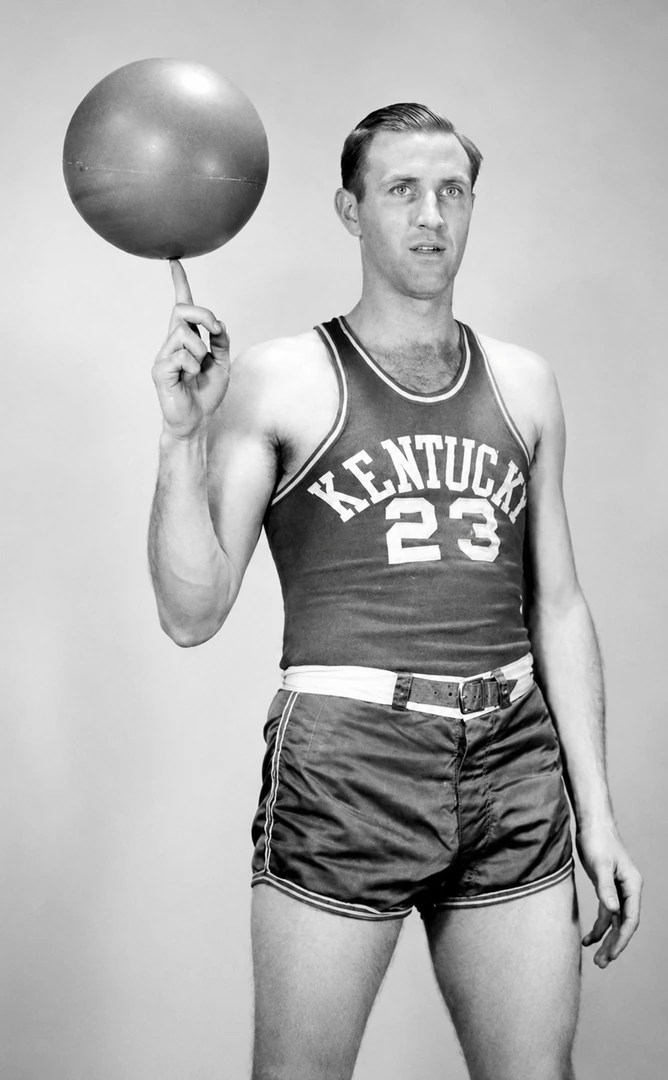
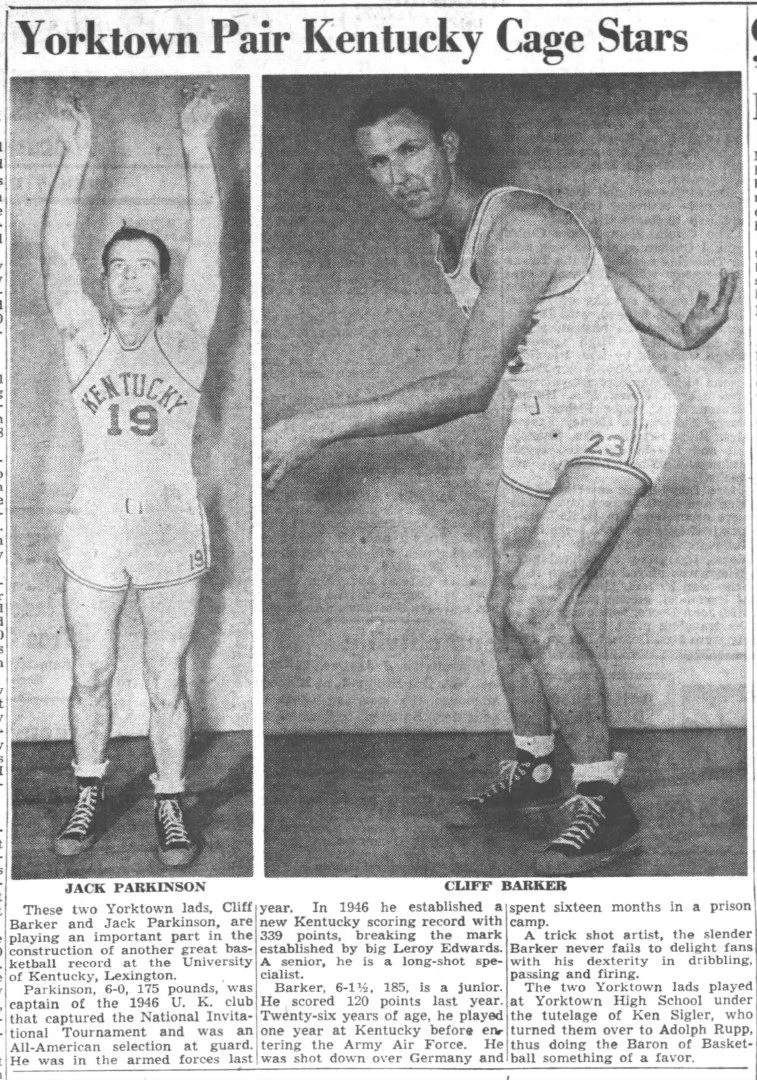
Cliff Barker was born Clifford Eugene Barker on January 15, 1921, in Yorktown, Indiana, to Horace and Gertrude Barker. A three-year varsity letterman at Yorktown High School, he earned all-sectional and all-county recognition three times while also becoming an exceptional baseball pitcher. In 1938, Barker pitched Yorktown to the Delaware County championship despite having his left arm in a cast from a fracture, completing a remarkable prep career in which he recorded 197 strikeouts and allowed only 17 runs in 20 games and five innings.
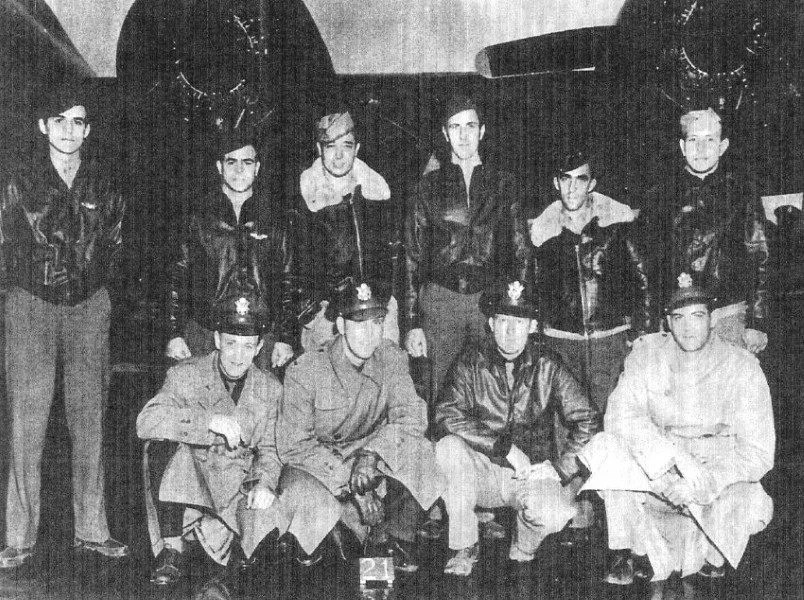
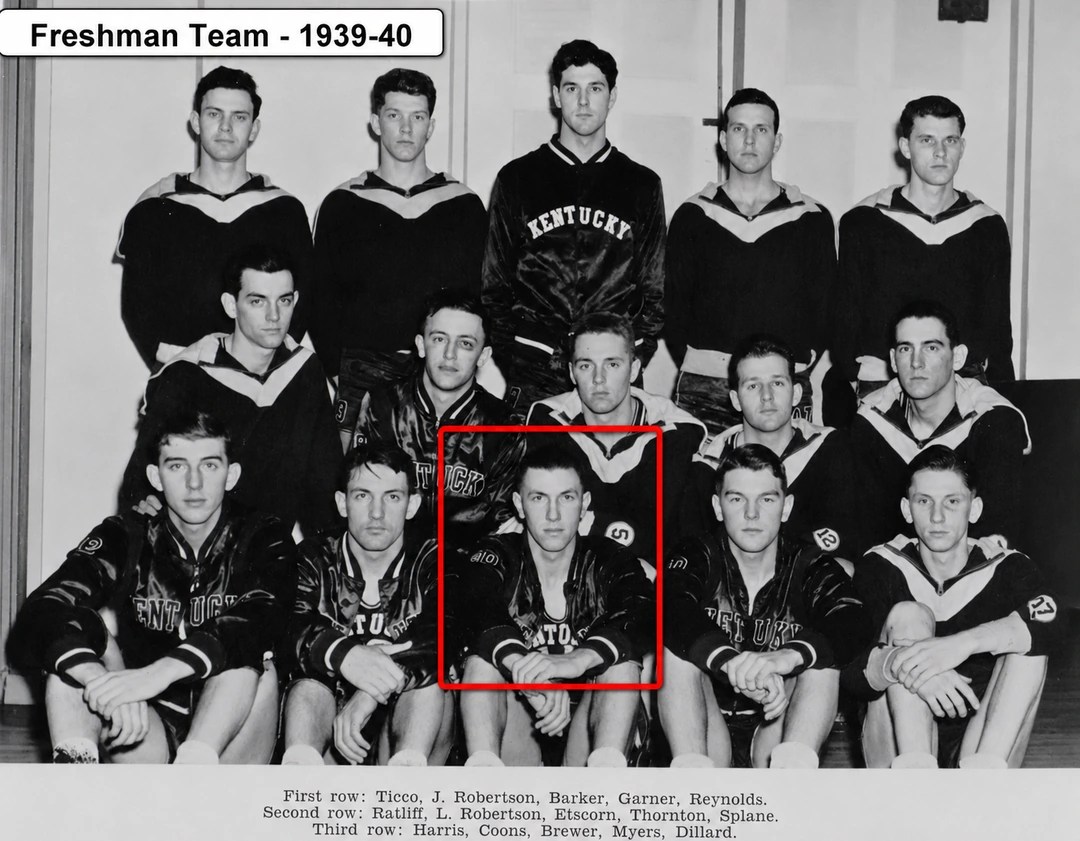
Barker enrolled at the University of Kentucky in 1939 and led the freshman basketball team in scoring, but the growing likelihood of American involvement in World War II caused him to leave college and work in a Muncie factory. He entered the Army Air Corps in September 1942 and became a waist gunner aboard the B-17 bomber *Fancy Nancy III*. On January 30, 1944, the plane was shot down during a mission over Germany. Barker escaped through a damaged parachute jump, broke two ribs upon landing and was taken prisoner.
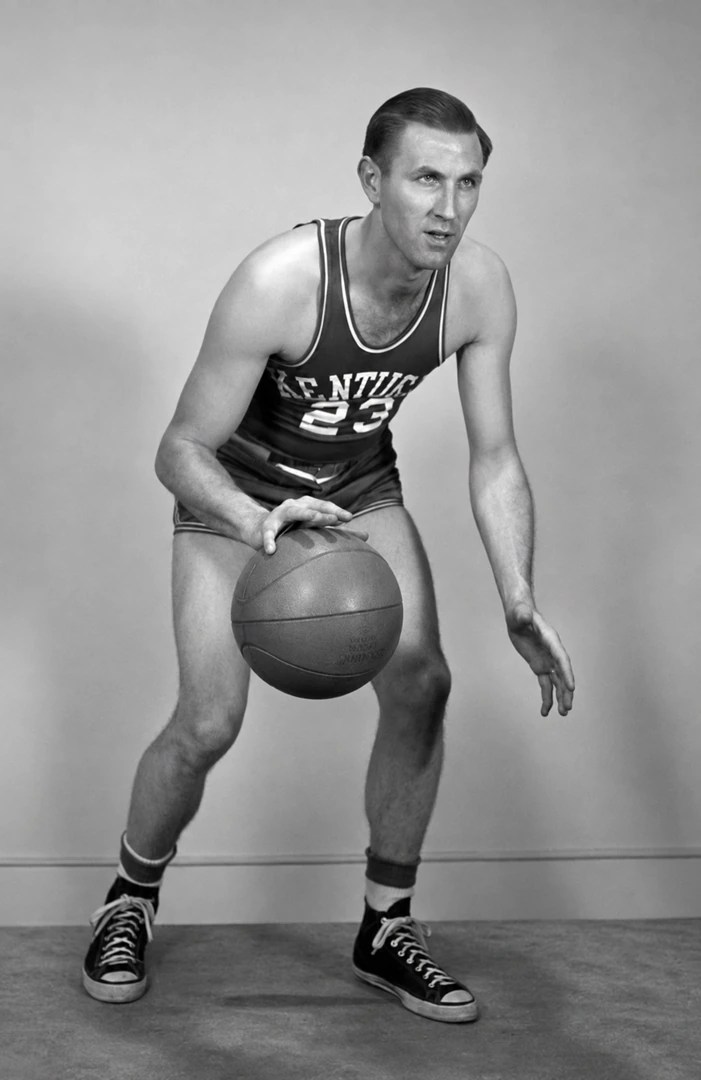
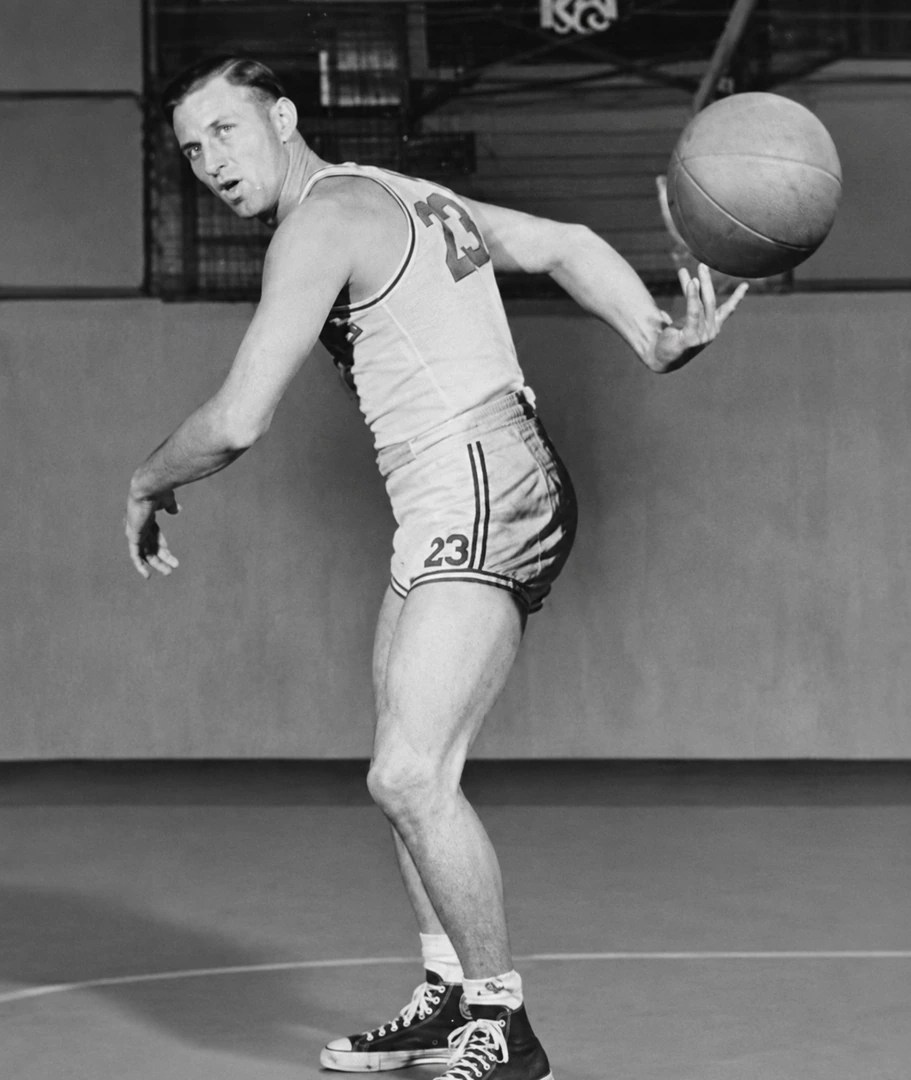
For the next 16 months, Barker was held in four German prison camps, including Stalag Luft IV in what is now Poland. With little available equipment, he passed the time by repeatedly bouncing and passing a volleyball, unknowingly sharpening the extraordinary ball-handling skills that would later distinguish him at Kentucky. Liberated near the end of the war, Barker returned home in June 1945 and was discharged as a staff sergeant.
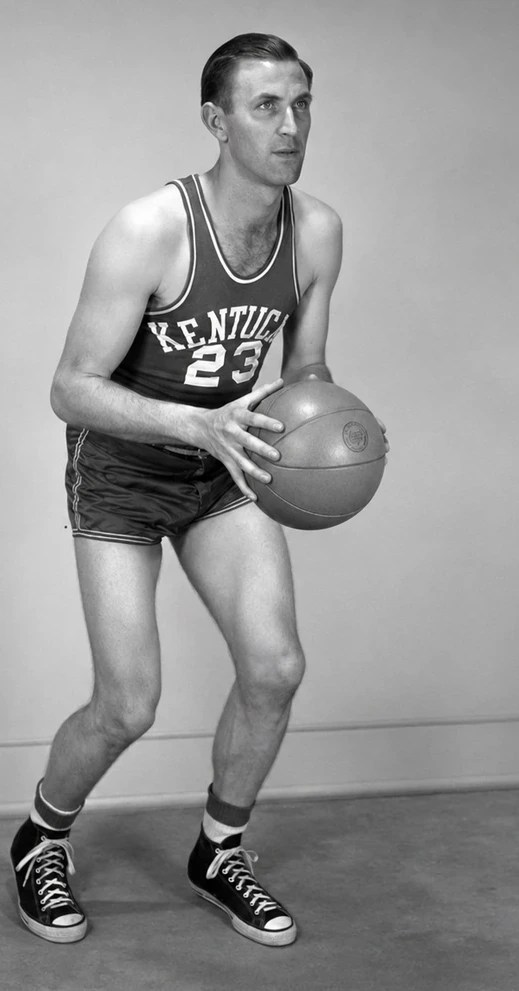
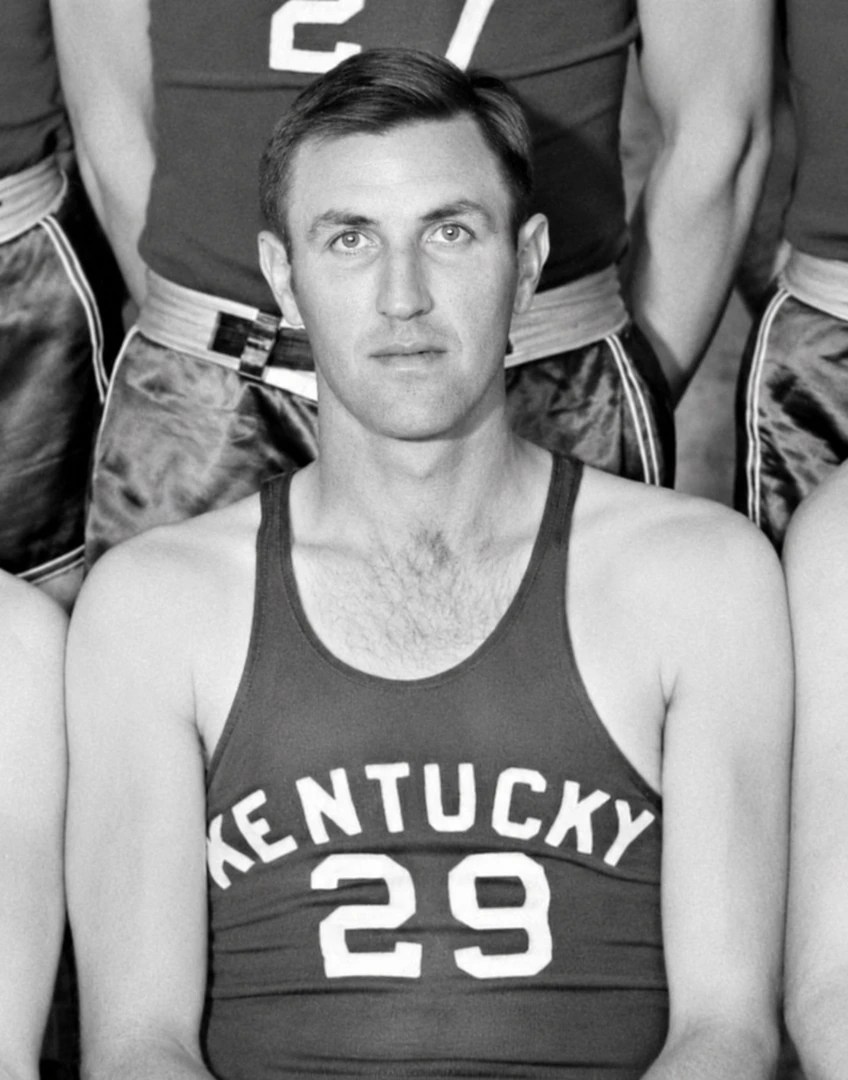
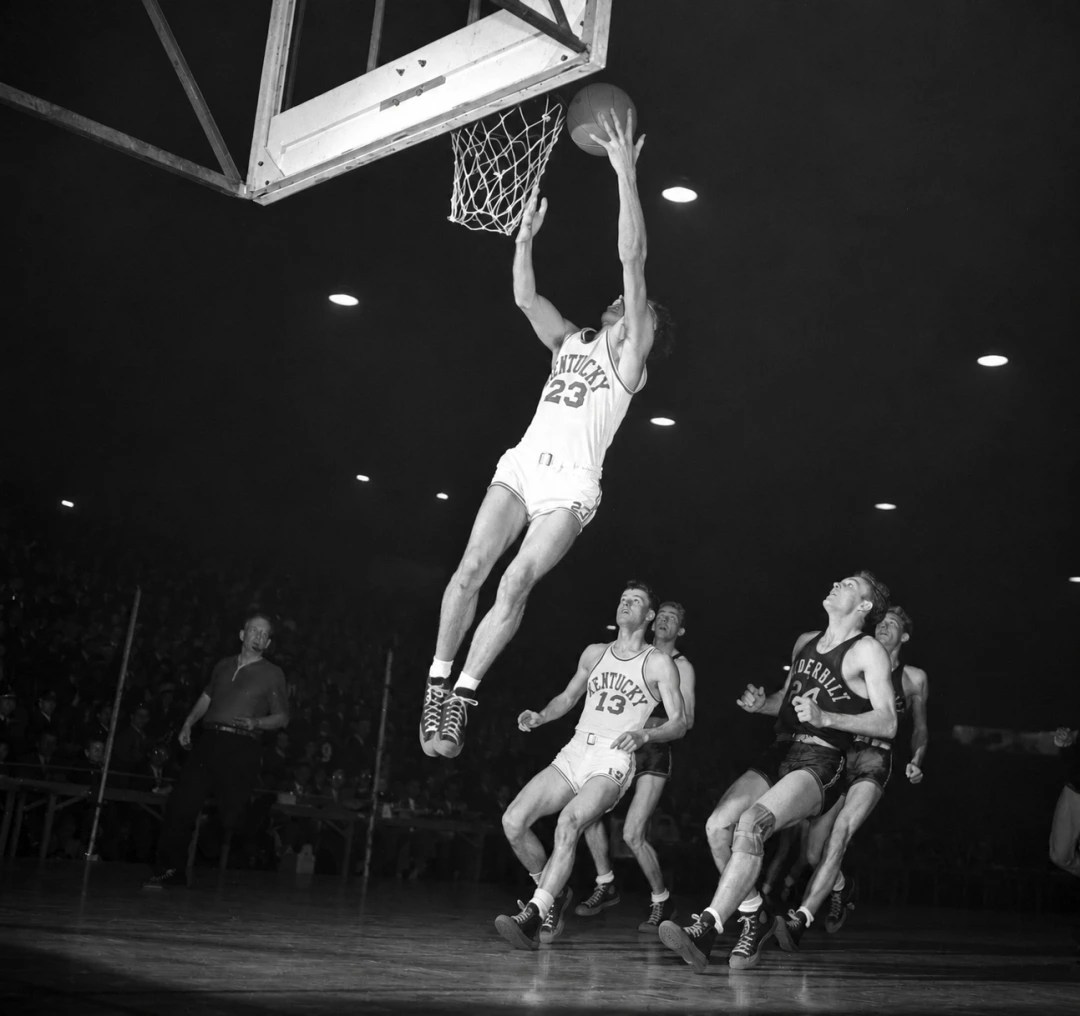
Barker rejoined Kentucky in January 1946 and eventually became the unheralded playmaker of Adolph Rupp’s “Fabulous Five.” Playing alongside Ralph Beard, Alex Groza, Wallace “Wah Wah” Jones and Kenny Rollins, he helped the 1947-48 Wildcats finish 36-3, capture the Southeastern Conference Tournament and defeat Columbia, Holy Cross and Baylor on their way to Kentucky’s first NCAA championship. Although Barker was not one of the team’s leading scorers, his exceptional hands, court vision and deceptive passing made Kentucky’s powerful offense run smoothly.
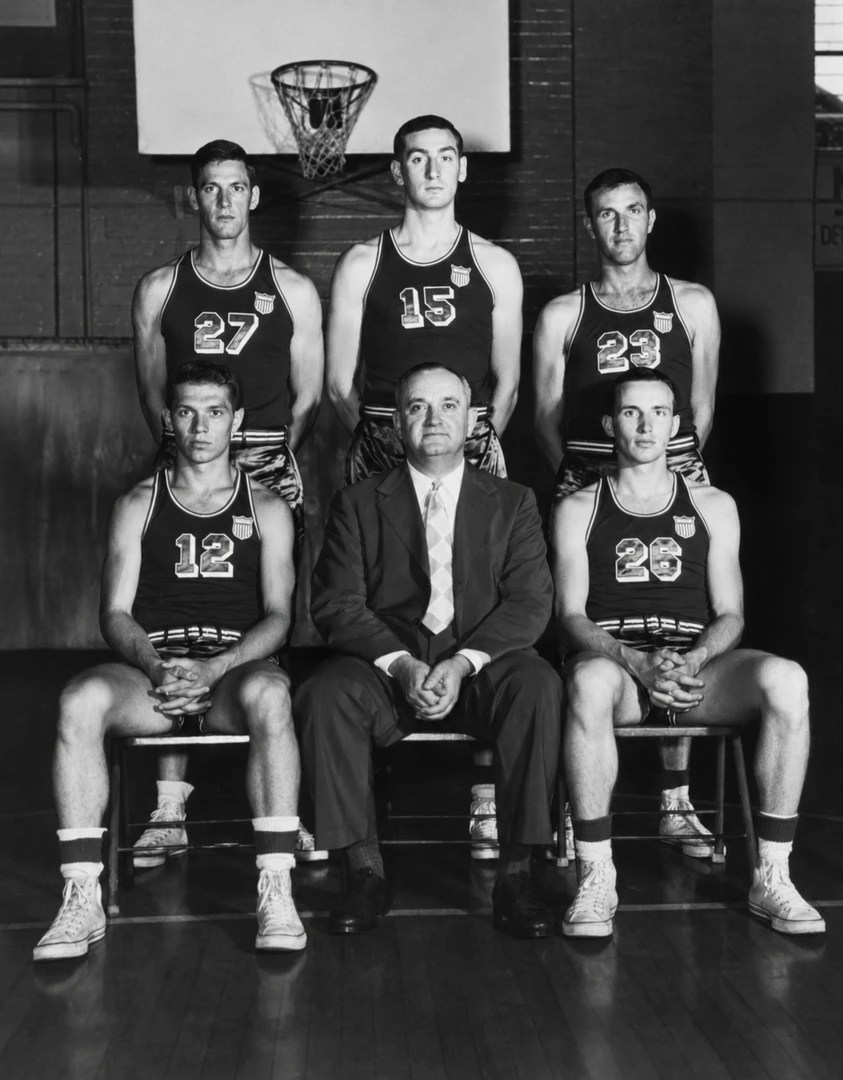
Following the championship, Barker and Kentucky’s other four starters joined the United States team at the 1948 London Olympics and returned home with gold medals. Barker then helped Kentucky win the 1949 NCAA championship with a 32-2 record, giving the Wildcats consecutive national titles. He also contributed to Kentucky’s 1946 National Invitation Tournament championship, making him part of three of the program’s earliest major postseason triumphs.
One of Barker’s most memorable moments came during his final game at Alumni Gymnasium. With only seconds remaining against Vanderbilt, Beard passed him the ball near the Commodores’ free-throw line. Barker launched a shot from approximately 65 feet that dropped through the basket and completed Kentucky’s 70-37 victory. When asked why such a gifted player did not shoot more often, Barker famously explained that he was too busy “making All-Americans out of the other guys.” On April 4, 1949, Kentucky retired his No. 23 along with the numbers worn by the other four Olympic starters.
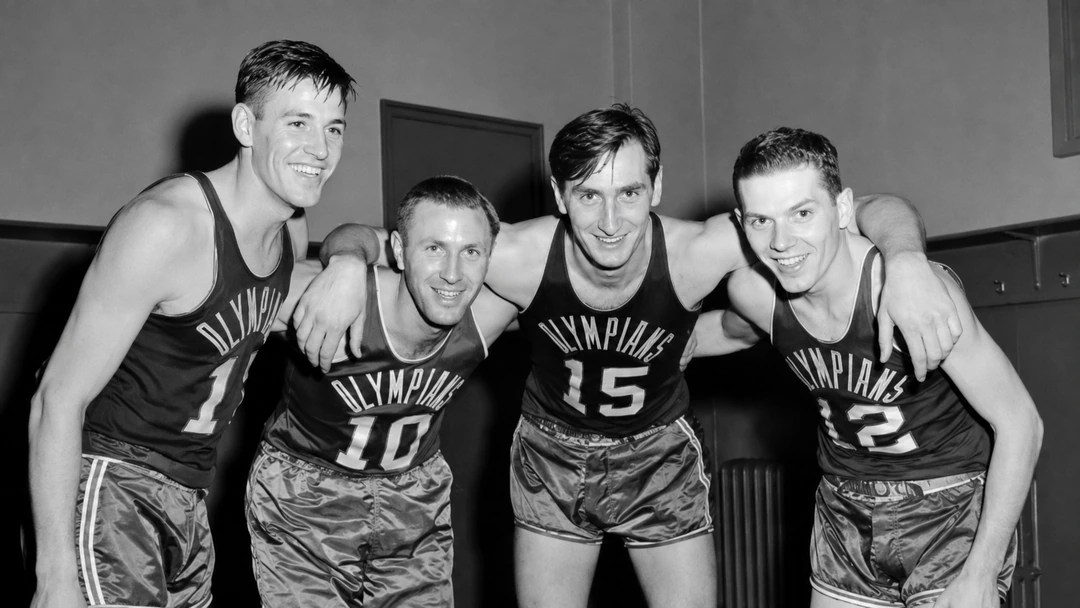
After leaving Kentucky, Barker became a player, part-owner and the first head coach of the Indianapolis Olympians. He guided the expansion club to a 39-25 record and first place in the NBA’s Western Division during its inaugural 1949-50 season, ultimately coaching 120 games while continuing to play guard. Barker was not implicated in the gambling scandal that later ended the careers of several former Kentucky teammates, but the damaged franchise folded after the 1952-53 season.
Barker later coached high school basketball in Indiana, Kentucky and Florida, including successful stops at Eaton and Jeffersonville, where one of his players was future Kentucky All-American Cotton Nash. He was inducted into the Indiana Basketball Hall of Fame in 1979 and the Kentucky Athletic Hall of Fame in 1995. Barker died on March 17, 1998, at his winter home in Satsuma, Florida, at age 77. Remembered by teammates and observers as one of the finest passers in Kentucky history, the former prisoner of war, Olympic champion and two-time NCAA champion left a legacy built as much on courage and selflessness as on basketball achievement.
Statistics:
NCAA
| Season | Team | MIN | FGM | FGA | 3PM | 3PA | FTM | FTA | OR | DR | PF | AST | TO | BLK | STL | PTS | G | MPG | FG% | FT% | 3P% | RPG | APG | SPG | BPG | PPG |
|---|---|---|---|---|---|---|---|---|---|---|---|---|---|---|---|---|---|---|---|---|---|---|---|---|---|---|
| Kentucky | 0 | 51 | 12 | 0 | 0 | 16 | 29 | 0 | 0 | 24 | 0 | 0 | 0 | 0 | 118 | 34 | 0.0 | 425.00 | 55.17 | 0 | 0.0 | 0.0 | 0.0 | 0.0 | 3.5 | |
| Kentucky | 0 | 91 | 26 | 0 | 0 | 45 | 82 | 0 | 0 | 91 | 0 | 0 | 0 | 0 | 227 | 35 | 0.0 | 350.00 | 54.88 | 0 | 0.0 | 0.0 | 0.0 | 0.0 | 6.5 | |
| Kentucky | 0 | 94 | 22 | 0 | 0 | 60 | 89 | 0 | 0 | 100 | 0 | 0 | 0 | 0 | 248 | 34 | 0.0 | 427.27 | 67.42 | 0 | 0.0 | 0.0 | 0.0 | 0.0 | 7.3 | |
| Total | - | 0 | 236 | 60 | 0 | 0 | 121 | 200 | 0 | 0 | 215 | 0 | 0 | 0 | 0 | 593 | 103 | 0.0 | 393.33 | 60.50 | 0 | 0.0 | 0.0 | 0.0 | 0.0 | 5.8 |
Career Totals
| Season | MIN | FGM | FGA | 3PM | 3PA | FTM | FTA | OR | DR | PF | AST | TO | BLK | STL | PTS | G | MPG | FG% | FT% | 3P% | RPG | APG | SPG | BPG | PPG |
|---|---|---|---|---|---|---|---|---|---|---|---|---|---|---|---|---|---|---|---|---|---|---|---|---|---|
| 1946-47 | 0 | 52 | 161 | 0 | 0 | 16 | 31 | 0 | 0 | 27 | 0 | 0 | 0 | 0 | 120 | 34 | 0.0 | 425.00 | 55.17 | 0 | 0.0 | 0.0 | 0.0 | 0.0 | 3.5 |
| 1947-48 | 0 | 98 | 317 | 0 | 0 | 52 | 93 | 0 | 0 | 101 | 0 | 0 | 0 | 0 | 248 | 38 | 0.0 | 350.00 | 54.88 | 0 | 0.0 | 0.0 | 0.0 | 0.0 | 6.5 |
| 1948-49 | 0 | 94 | 315 | 0 | 0 | 60 | 88 | 0 | 0 | 99 | 0 | 0 | 0 | 0 | 248 | 34 | 0.0 | 427.27 | 67.42 | 0 | 0.0 | 0.0 | 0.0 | 0.0 | 7.3 |
| Total | 0 | 244 | 793 | 0 | 0 | 128 | 212 | 0 | 0 | 227 | 0 | 0 | 0 | 0 | 616 | 106 | 0.0 | 393.33 | 60.50 | 0 | 0.0 | 0.0 | 0.0 | 0.0 | 5.8 |
Photos: